
Hospitals are facing circumstances that make it difficult to avoid this hard to accept truth; sticking to traditional cleaning practices may no longer be an option. There was a recent webinar titled “Status Quo Is a No-No.” It challenged healthcare professionals to rethink their infection prevention strategies and embrace evidence-based innovation to bring consistency to traditional cleaning processes that are inherently unreliable and often result in transmission from contaminated surfaces to hospital staff and patients.
Why Traditional Cleaning Isn’t Enough
Despite decades of standardized protocols, research continues to show that manual cleaning and chemical disinfection miss the mark far too often. Studies reveal that bedrails, workstations, and other high-touch surfaces can still harbor dangerous pathogens even after multiple rounds of bleach-based disinfection1. In fact, one 2024 study found that 25% of hospital rooms remained contaminated with Acinetobacter baumannii despite four separate cleanings2. Compounding the issue, 80% of staff were unaware of how proper cleaning practices directly reduce pathogen transmission3.
This breakdown between intent and effectiveness underscores the limits of traditional methods—and the need for advanced microbial reduction support technologies to fill those gaps.
The Evolving Pathogen Landscape
The world of microbial evolution isn’t standing still. Antibiotic resistance is expanding rapidly, with more than 2.8 million antibiotic resistant transmission events annually in the United States alone4, costing the healthcare system over $20 billion in excess healthcare costs each year5. Pathogens such as ESBL-producing bacteria and extreme drug-resistant organisms can survive traditional chemical cleaning and linger in hospital environments for extended periods. Their resilience not only raises treatment costs but also increases patient morbidity and mortality.
Among these threats, pathogens like Pseudomonas aeruginosa and MRSA demonstrate just how easily microorganisms can spread from contaminated surfaces to patients. Research shows that 20–40% of transmission events are due to cross contamination from surfaces to patients6. Worse still, transmission risk rises by 145% when a patient takes a room previously occupied by someone who was colonized or had a known infection7.
LightStrike+ and the Power of Technology
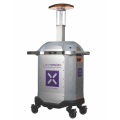
This grim reality has led hospitals across the country to turn to innovative technologies like LightStrike+. Unlike conventional hospital disinfection methods, LightStrike+ offers FDA-authorized Whole Room Microbial Reduction—reducing pathogens on treated surfaces by at least 99%. It doesn’t replace traditional cleaning; it enhances it, bringing consistency and reliability that traditional cleaning alone cannot achieve.
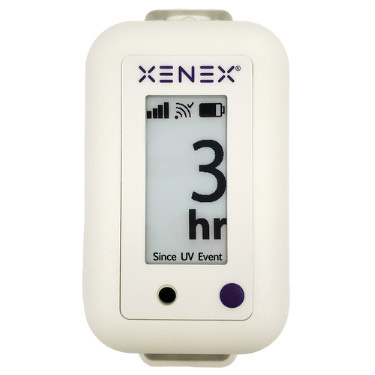
Moreover, LightStrike+ system data can be tracked through their custom portal, providing various dashboards for visibility and reporting, turning each cycle into actionable insight. By monitoring compliance in real time—whether at the room, unit, or hospital level—teams can identify missed areas, close compliance gaps, and ensure every space receives optimal microbial reduction. Historical data show that facilities reaching 80% or higher compliance with their standard operating plan can achieve optimal reductions in pathogen transmission. This data-driven approach transforms their program into a measurable, repeatable science rather than a best-effort task.
Maximizing Use and Value
Every LightStrike cycle is more than an operational step—it’s an investment in environmental hygiene, risk avoidance, cost avoidance, and organizational efficiency. Hospitals that leverage their LightStrike UV robots tend to see fewer transmission events, better compliance with infection control benchmarks, and substantial downstream cost savings. Xenex works with customers to develop a customized plan and recommends reviewing reporting dashboards weekly, incentivizing their top performers, and treating compliance as a dynamic, ongoing process rather than a static goal.
Support for LightStrike users extends beyond the robots themselves. Facilities receive ongoing training, data analysis, optimization consulting, and even a justification toolkit to demonstrate the value and benefits. With this holistic support model, environmental service and infection prevention teams are empowered not just to adopt new technology but to sustain its impact long-term.
A Call to Go Beyond the Status Quo
Infection prevention professionals understand the stakes—lives, budgets, and reputations all depend on their vigilance.
In this webinar, the message is clear: doing what’s always been done is no longer enough. The rise of resistant pathogens, inconsistent manual cleaning, and the sheer complexity of hospital environments demand layered, science-backed approaches.
Technologies like LightStrike+ make it possible to turn uncertainty into assurance. By embracing these highly effective microbial reduction tools and turning data into daily action, healthcare leaders will be able to safeguard their facilities against today’s toughest pathogenic threats. The choice isn’t just between old and new cleaning methods—it’s between staying static in a world where pathogens evolve beyond our control or advancing toward a smarter, more resilient future.
————————————————————————————————————————————————————————————————————————–
- Jinadatha C, Am J Infect Control, 2024
- Curran ET, J Infect Prev, 2019,
- Hamed NM, Antimicrob Resist Infect Control, 2024
- CDC Core Elements of Hospital Antibiotic Stewardship Programs
- CDC MMWR Report
- Understanding the significance of microbiota recovered from health care surfaces Jinadatha, Chetan et al.American Journal of Infection Control, Volume 52, Issue 2, 220 – 224
- Mitchell, B. G., et al. Infect Dis Health, 28(4), 290-297. doi:10.1016/j.idh.2023.06.001